
From Intention to Impact: Why Most Transformations Stall at the Human Level
Your transformation strategy is sound. Your business case is approved. Your project plan is detailed and realistic.
Yet three months in, you're seeing the pattern you've seen before: initial momentum followed by plateauing adoption, pockets of enthusiasm surrounded by quiet resistance, and a growing gap between what's happening in status meetings and what's happening on the ground.
Here's what we've learned: The strategy is rarely what fails. It's the human dimensions we haven't adequately diagnosed.
What Causes Employee Resistance to New Initiatives
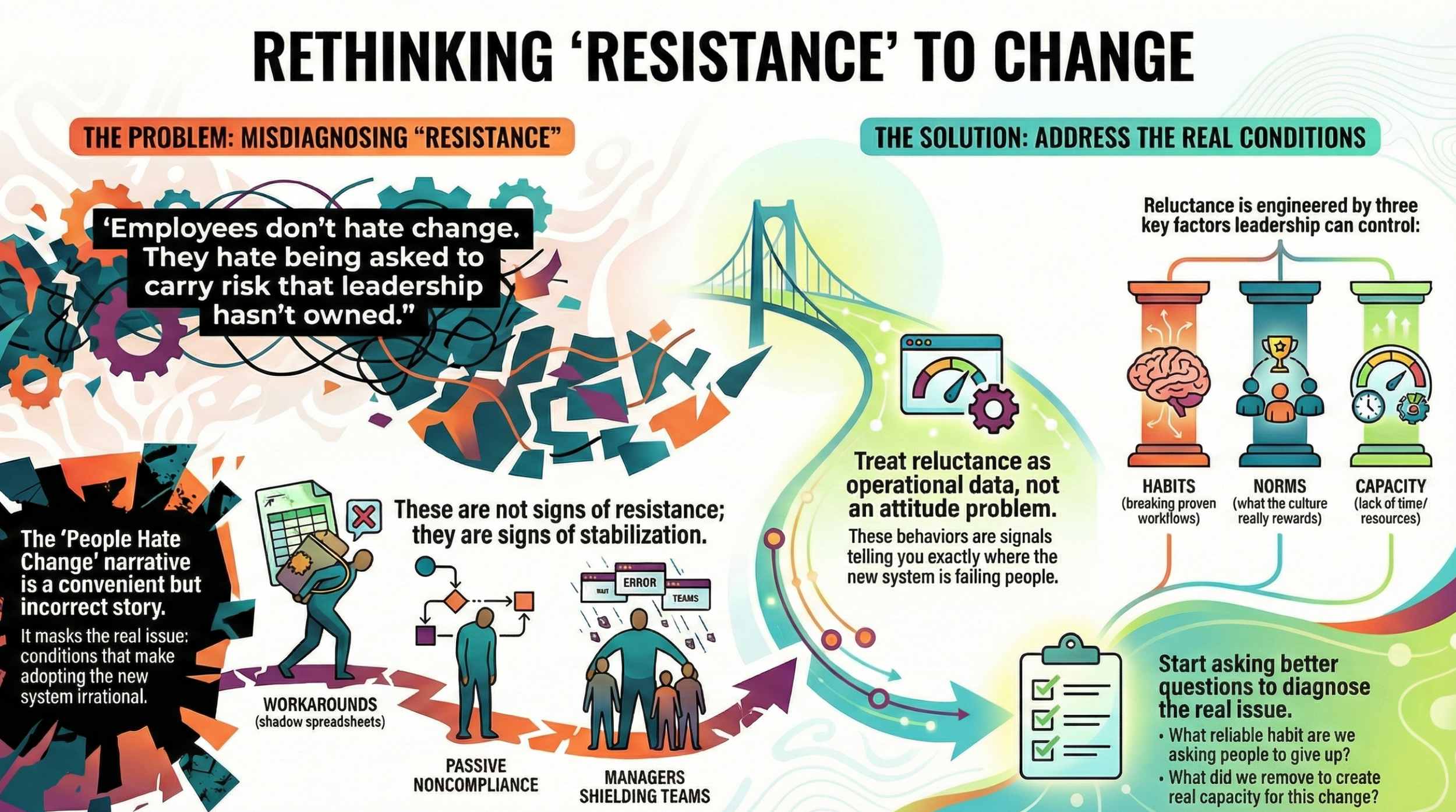
When you see workarounds, shadow spreadsheets, and managers shielding their teams during your ERP rollout or AI implementation, you're not looking at resistance. You're looking at risk management.
Those behaviors are data. They're telling you something specific: the new system isn't yet dependable enough to carry the consequences of real work. So people create parallel paths to protect outcomes, not because they're backward or difficult, but because the conditions you've designed make adoption irrational.
The fix isn't selling harder. It's reading reluctance like a dashboard and asking better questions. Not "How do we overcome resistance?" but "Which conditions are making adoption irrational right now?"


Your Org Isn't Tired of Change. It's Tired of Unfinished Change.
Stop calling it change fatigue. Learn why initiative overload, vague priorities, and broken promises create burnout, and how to govern change portfolios smarter.
Your Project Plan Isn't an Adoption Plan
Your project plan tracks the build, not the behavior change. Learn how to write a real adoption plan with role clarity, workflow integration, and measurable behavior.

Behavior Follows Conditions, Not Announcements
Behavior follows conditions, not announcements. Discover why awareness doesn't drive adoption and how to use the Five Levers to engineer real organizational change.